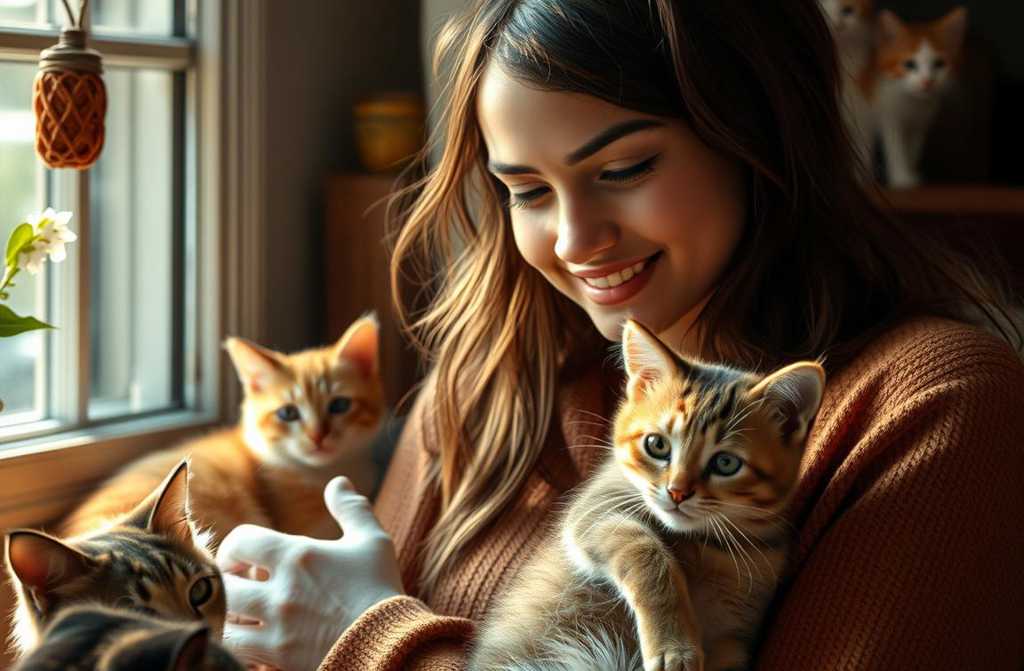
Generosity
Emily and Daisy grew up in a respectable English household, Emily being the elder and Daisy the younger sister. Their parents raised them with equal love and affection, yet their temperaments were quite different.
From childhood, Emily could never walk past a stray cat or dog without stopping to help. She’d bring them all home.
“Emily, why on earth have you brought in that filthy kitten?” her mother would scold.
“Mum, his paw hurts—he’s limping. Please, let’s keep him. I’ll take care of him,” she’d plead.
Many children go through such phases, but most outgrow them. Not Emily.
Some people are born with hearts so tender they seem almost saintly. Emily was one of them. Most grow harder with age, or at least more discerning, but for her, kindness became a habit, a calling.
The girls grew up, and soon Emily was a young woman. Yet the flat was always full of cats, the place in disarray—not just one, but several. She bathed them in the tub, bowls of food cluttered the kitchen, litter trays filled the bathroom. The creatures dashed about, knocking things over, but Emily always defended them.
“Mum, they don’t know any better—they’re just animals.”
Arguing with her was pointless. In time, she finished school and enrolled in veterinary college. No one at home was surprised. It seemed her destiny.
“Emily, with all these cats, you’ll never find a husband. What man would put up with the mess, the smells, the feedings, the treatments?” her mother fretted, and Daisy agreed.
“Someone will,” Emily would retort. “Not everyone’s as hard-hearted as you.”
Eventually, Emily moved out with her pets into her grandmother’s old flat. The woman had recently passed, leaving the place to Emily—likely knowing she’d need it more, with all her animals.
“Mum, I’m so happy—a two-bedroom flat! One room for the cats, one for me.”
“Emily, you’re so wrapped up in those creatures, life will pass you by without you noticing,” her mother worried, fearing her daughter might never find love.
Years slipped past. Daisy graduated university, and then, one day, Emily announced she’d be visiting—not alone.
“What’s she bringing this time?” her parents muttered. “Probably some enormous stray dog—she’d do that without a second thought.”
But that evening, the doorbell rang, and there stood Emily—with a young man.
“Meet Oliver,” she said. Her mother burst into happy tears and fussed over them. “Come in, come in! We’re so pleased!”
Over tea, her mother pressed for details.
“I went to a veterinary conference for the clinic, and Oliver was there too. We sat together, got talking. We just… understood each other,” Emily gushed, and he nodded.
Oliver was serious, kind, and just as devoted as Emily. They moved in together, turning one room into a shelter. He, too, adored cats.
After a while, they married quietly—no fanfare, as their funds went to their animals. Food, medicine, vet bills. Their fridge was stocked mostly with cat medications.
“Darling, you didn’t even tell us you were marrying! We’d have thrown a little gathering,” her mother chided, hurt.
But when relatives heard, they pooled money for the couple, congratulating them warmly. Three years passed, and Emily showed no sign of starting a family.
“Later, Mum. Let us settle things with the cats first, then we’ll give you grandchildren,” she promised.
But fate had other plans. Oliver died suddenly—a heart attack in his prime. He’d been feeling unwell but blamed his hectic schedule. Between the clinic and their home full of animals, he’d pushed himself too hard.
Emily was shattered. Her parents and Daisy did their best to comfort her. Daisy, especially, took charge, visiting often—until one day, she found the flat in disarray, litter trays neglected.
“Emily, what’s wrong? This isn’t like you.”
“I’ll clean it later,” Emily murmured.
“Let’s do it together,” Daisy offered. As they worked, Daisy fretted silently. Emily had never neglected her animals before.
She visited more often, growing increasingly concerned. Emily seemed distracted, even forgetting to feed the cats. Then she confessed: she’d been helping homeless people, feeding them. Daisy grew uneasy—some were unsavoury—but she couldn’t watch her sister day and night.
Then, oddly, Emily seemed brighter, even smiling again.
“Thank heavens,” their mother said when Daisy reported the change. “Some never recover from such a loss. But Emily’s young, strong—she’ll heal.”
Then a neighbour complained of a foul smell in the building—and mentioned a vagrant visiting Emily’s flat. Daisy realised: her sister wasn’t just feeding the homeless, she was inviting them in.
She broached the subject carefully.
“Emily, there’s an awful smell—not from the cats. The neighbour’s upset—”
“I’ve been helping an old man,” Emily cut in. “Poor soul—scammers took his flat. He’s lovely, like a father to me. I’ve even given him some of Oliver’s things. He comes round, eats, bathes here. He needs me.”
“But Emily, he’s a stranger! Why bring him home?”
“What’s he going to steal? With these cats, I’ve nothing worth taking.”
“Don’t be naive! He could take the telly, at least!”
Emily shrugged. Winter had come; the cold bit deep. She let the old man stay longer—he even helped with the cats, cleaning trays, filling bowls. She half-joked about getting him work at the clinic, but he just shrugged.
Five days later, he vanished—along with the fridge (and its medicines), the telly, the hallway cupboard, the dresser. Only the sofa and kitchen units remained. Even Oliver’s clothes were gone.
Emily asked the neighbour, “Did you see who took my things?”
“No, love. People move out all the time—who notices?”
At least the donations for cat food and medicine were safe at the clinic—a tidy sum.
When Daisy heard, she rushed over. “Did you report it to the police?”
“No. The cats are still here—that’s what matters.”
“Emily! Who’d want your cats? They took everything!”
“You wouldn’t understand. No one does. Only Oliver did—and he’s gone.”
From then on, at least her family had one comfort: Emily steered clear of vagrants. Relatives chipped in for a new fridge, telly, and bits of furniture. But she’d never part with her cats. “It’s my purpose,” she said.
Perhaps she was right. Who else would care for sick animals? Not many—it takes a peculiar, stubborn generosity. Emily lived for it. Her family could only hope she’d one day find another soul like Oliver.